
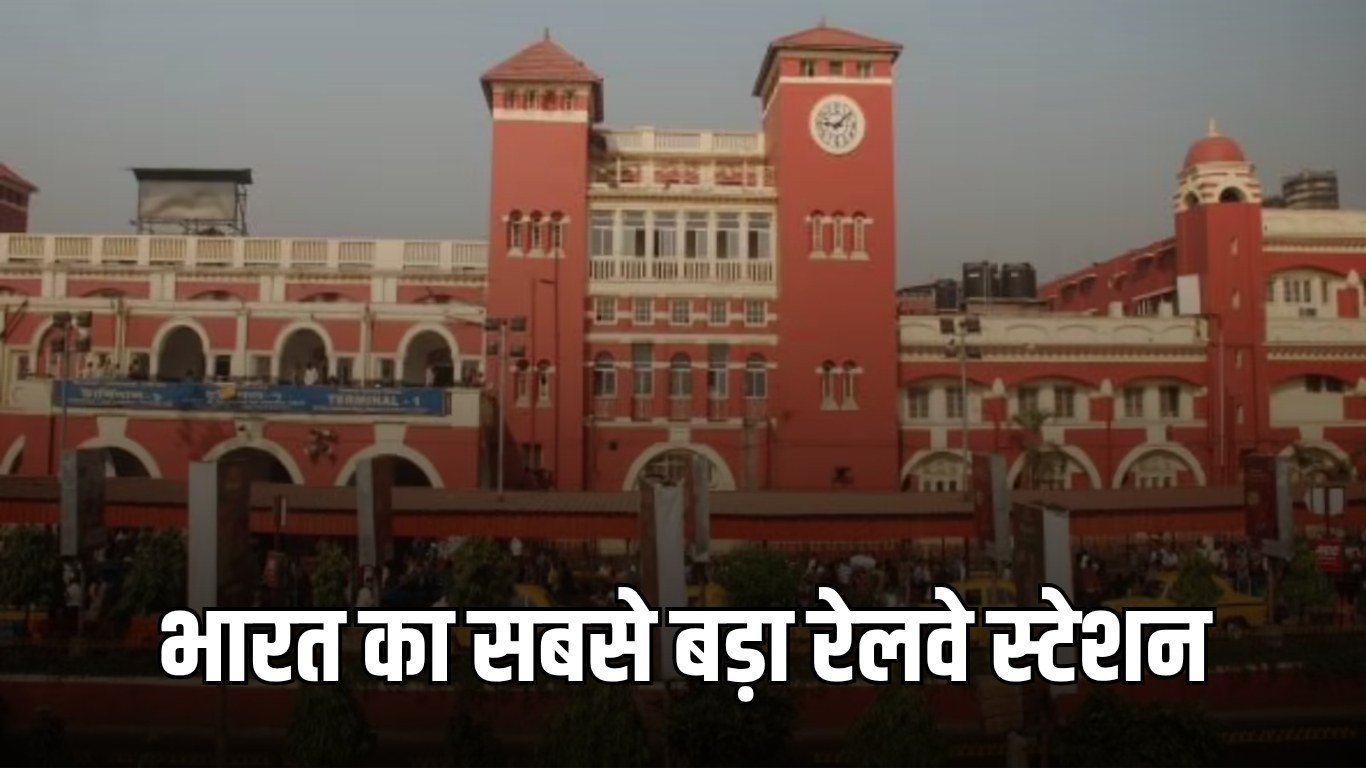
Howrah Junction: Howrah Junction continues to hold a significant place in India’s railway network as one of the largest, oldest, and busiest railway stations in the country. Contrary to popular belief that major stations are located in cities like Delhi or Mumbai, Howrah Junction in West Bengal stands out with its scale, history, and operational capacity.
Located in West Bengal, Howrah Junction is operated under the Eastern Railway zone and serves as a major connectivity hub linking Kolkata with key cities across India, including Delhi, Mumbai, Chennai, and Bengaluru.
The station is known for its impressive infrastructure, featuring 23 platforms—more than many other major stations such as New Delhi Railway Station and Mumbai’s Chhatrapati Shivaji Maharaj Terminus. According to railway records, the station handles approximately 450 suburban trains and over 100 long-distance trains every day, making it one of the busiest railway stations in the world.
Historically, Howrah Junction dates back to 1854 when it was established by the East India Company. The first passenger train from the station ran on 15 August 1854 on the Howrah–Hooghly line, marking an important milestone in the history of Indian Railways. Over the decades, the station has undergone multiple expansions, eventually reaching its present capacity of 23 platforms.
With an estimated daily footfall of over 10 lakh passengers, Howrah Junction remains a critical transport hub for eastern India. Its proximity to the iconic Howrah Bridge (Rabindra Setu) further adds to its importance as a landmark of Kolkata.
Today, the station is not only a major transit point but also a symbol of India’s railway heritage, reflecting more than 170 years of continuous evolution and growth.

 Join WhatsApp
 Join Facebook
 Follow X (Twitter)
 Follow Telegram